

Phase Two
Spiritus Diocesan Implementation
Implementation: Teacher and Student Formation
Spiritus Diocesan Implementation Phase 2 involves school leaders planning, leading and evaluating the implementation of two high-impact change strategies. The high impact strategies are firstly, leading and facilitating the formation of other leaders and staff within their school. Secondly, teachers leading and supporting the formation of students for peer-to-peer youth ministry within the school. The Spiritus Diocesan Implementation Project Team will support school leadership teams in this work. SPIRITUS Diocesan Implementation Phase 2 includes additional formation, planning and annual review with school and system leaders.
Ongoing Leader Formation
Spiritus Leader Formation Program Part 3 - Leading Evangelisation
Formation as SILN Leader of Evangelisation
Formed in Prayer
Essentials for Faith Leadership
Staff Formation
Porta Fidei Retreat
Called Program
ACU Voices and Visions
Student Formation for Peer-to-Peer Ministry
Retreat/ Youth Ministry Experiences
Catechetical Pathway within RE Curriculum
Youth Ministry Teams
Engagement with broader Church
i. Staff Formation for Mission
When planning for staff formation, it is essential to recognise the diversity of staff members’ faith journeys, cultural backgrounds, life experiences and relationships with the Church. The National Catholic Education Commission’s Life to the Full (2024) acknowledges the increasingly diverse religious and social backgrounds of Catholic school communities, declining involvement in parish life, and the need to strengthen formation for staff in all roles. It also recognises that, for many students, families and staff, the Catholic school provides their principal—and sometimes only—experience of Church and Catholic life. These circumstances call for formation that begins with people’s lived experiences and offers opportunities for dialogue, prayer, reflection and participation in the Church’s mission. (NCEC, 2024, pp. 3, 6–7, 10)
Recent scholarship also highlights the importance of helping religious educators develop religious literacy, deepen their understanding of the Catholic tradition, and connect faith with their professional practice. Together, these publications suggest that formation should be ongoing and responsive to differing starting points, supporting staff to deepen their understanding of, and contribution to, the mission of Catholic education. (Poncini, 2024) Michael Buchanan (2022), in Catholic Teacher Formation in the Land Downunder, suggests that as the first contact for faith for most staff, schools must be a context for teacher formation.
Teacher formation within a school can take many forms, implicit and explicit. It is implicit within a staff culture and community shaped by the quality of Christian witness and relationships. The explicit forms include activities such as staff prayer, staff retreats and school and system-wide formation programs. The SPIRITUS International Leaders Network is a crucial platform for delivering and resourcing staff formation within a system or school.
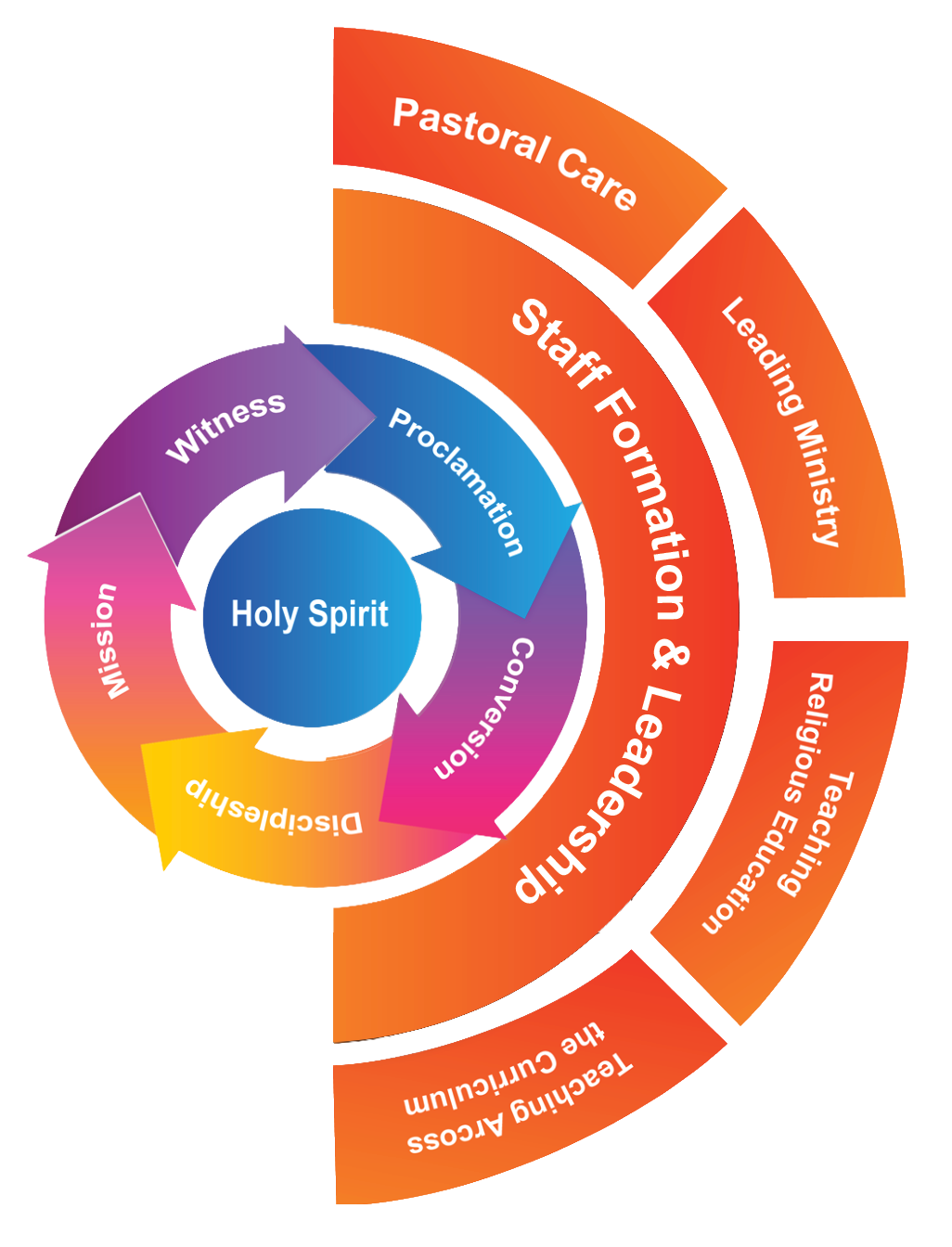
Teacher formation within a school can take many forms, implicit and explicit. It is implicit within a staff culture and community shaped by the quality of Christian witness and relationships. The explicit forms include activities such as staff prayer, staff retreats and school and system-wide formation programs. The SPIRITUS International Leaders Network is a crucial platform for delivering and resourcing staff formation within a system or school.
Staff formation programs within the school that can be implemented by school leaders include the following:
Called can be offered to all staff and conducted in small groups, including early career teachers, middle school leaders and executive groups. Essentials for Faith Leaders is a follow-on program that can be conducted in school with executive and middle leaders.
Voices and Vision: Catholic Schools in Conversation is a resource that facilitates dialogue between those who work in Catholic school communities, helping them consider ways to bring to life the values proposed in the Church documents. It uses quotes, poems and prayers from various authors whose writings align with the themes and ideas in the documents and inspires the reader to interpret their meaning for their particular context.
A range of opportunities for retreat, including the Porta Fidei retreat experience.

The Spiritus
Forming Leaders Series
These programs seek to renew, form and equip leaders, and aspiring leaders, as missionary evangelisers. They can vary in mode, location and duration.
Porta Fidei
Porta Fidei is a retreat experience for teachers consisting of testimonies, reflection and conversation in small groups, Eucharist and Reconciliation.
Called
At the heart of Called is the desire to increase participants’ understanding of discipleship. It provides videos of personal testimonies on six topics, and a range of discussion starters that guide personal reflection and small group activities.
Essentials
Essentials for Faith Leadership provides video presentations by leading Catholic leaders on ‘Evangelisation’, ‘Leading with Balance’, ‘Discernment’, ‘Humility’, ‘The First Proclamation’ and ‘Youth as Leaders in Evangelisation’. It offers a range of discussion starters that guide personal reflection and small group activities.
"Student faith formation occurs in and through various experiences across the life of the school… Faith formation is not an “add-on” or just one component of the formation process. For this reason, faith formation is at the heart of the mission of the Catholic school. Faith formation is a mysterious process; it can be perplexing, multifaceted and difficult to evaluate. Faith is a gift of the Holy Spirit.”
(A Framework for Student Faith Formation in Catholic Schools, NCEC, 2022, pp. 10, 24)
ii. Student formation
A Framework for Student Faith Formation in Catholic Schools published by the Australian National Catholic Education Commission identified the following elements of student faith formation (pp.22-23)
Enabling witness and encounter with Jesus
Invitational
Individual and communal
Relational and accompanying
Integrated with family and parish
Drawing upon a rich Catholic tradition
Dialogical and inclusive
Religious and spiritual
Discerning and vocational
Justice and service oriented
Differentiated and ongoing
Intentional and planned
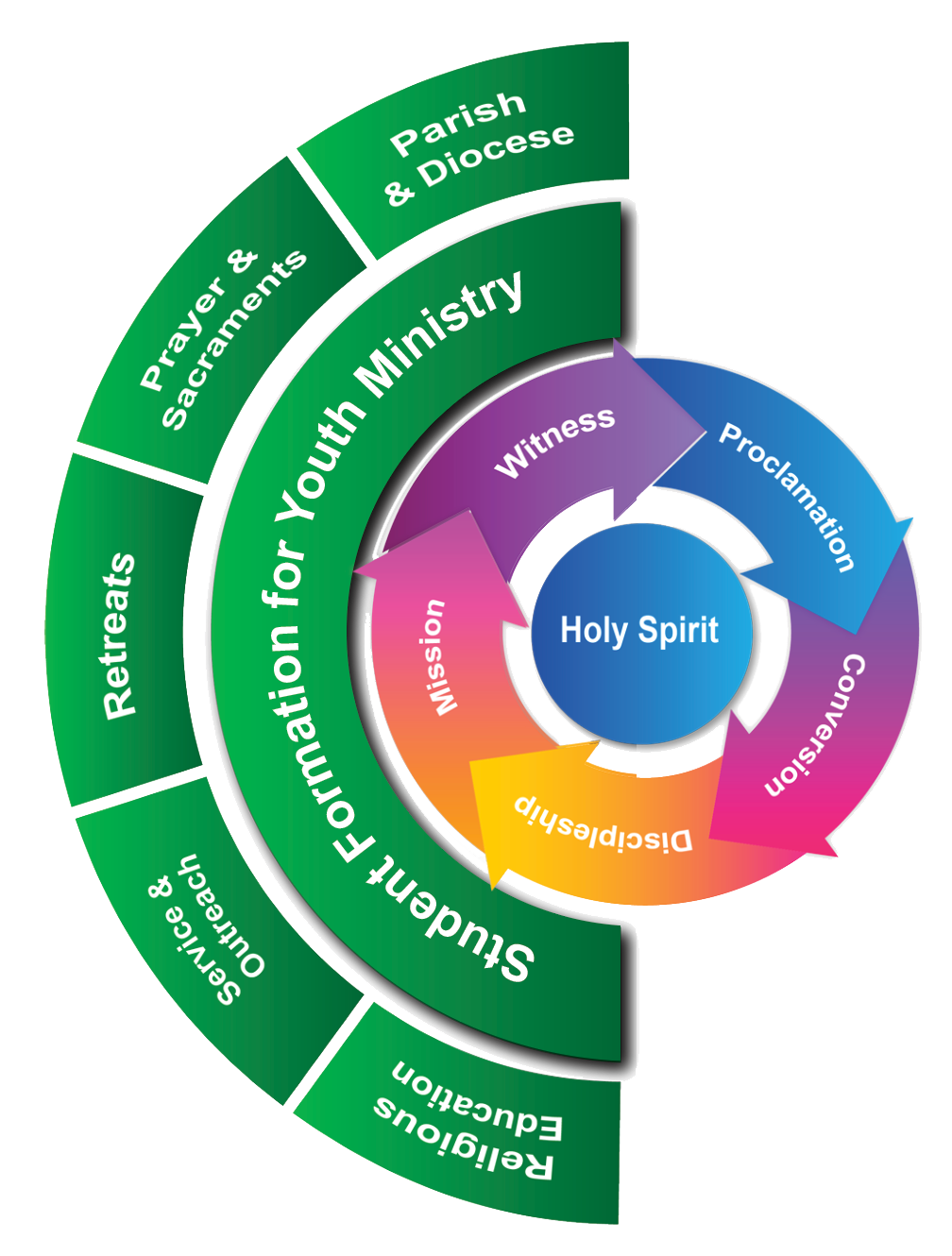
A Vision and Model of Youth Ministry
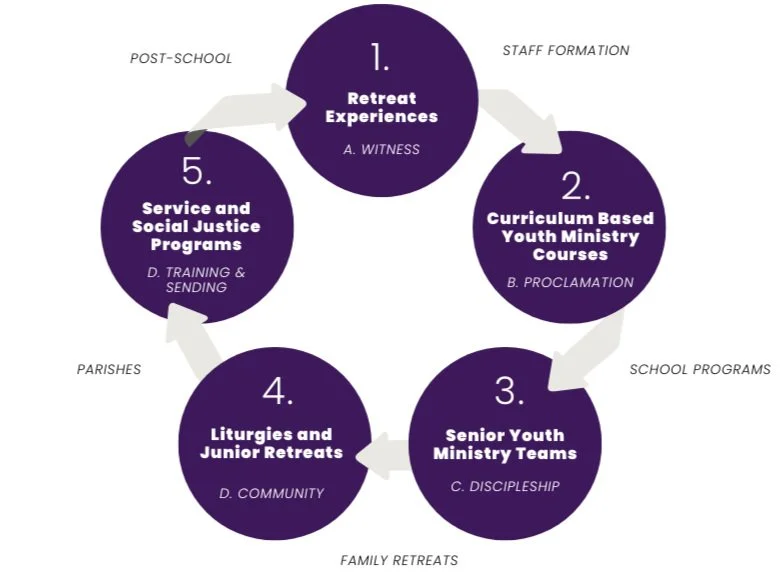
SPIRITUS Diocesan Implementation involves developing an integrated model of youth ministry within a school, such as the one underpinning Spiritus Youth Ministry.
The Spiritus Youth Ministry Model is built on an evangelisation process consisting of witness, proclamation, conversion, discipleship, community and mission outreach.
Events
Events can play a significant role in the faith journey of young people. The impact of regional, diocesan, national and international events such as the Australian Catholic Youth Festival and World Youth Day and have been well expressed in the testimonials of countless Catholic young people.
Spiritus Youth Ministry retreat programs and events for students include Journeying with Jesus, Catch the Wave, SHINE, ILLUMINATE and LEAD.
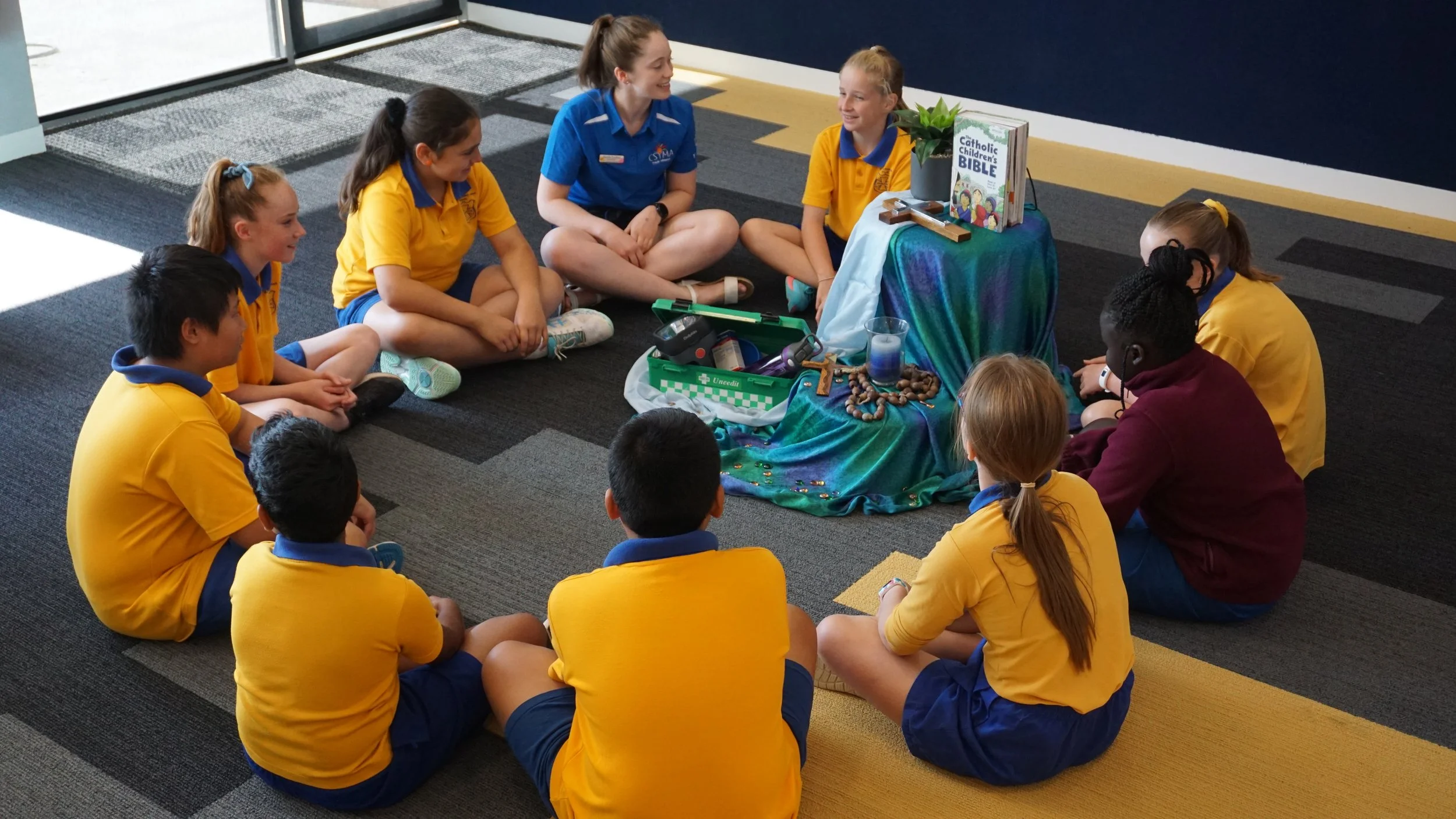
iii. Post School Youth Ministers
The Spiritus Youth Ministers Network is a network that forms, equips and resources post-school youth ministers engaged in a year of mission whilst actively participating in the life of the Catholic Church. Youth ministers are engaged in a local placement, on a part-time or full-time basis, within schools and/or parishes. Youth ministers support the implementation of the Spiritus Youth Ministry International ministry model in schools. They can also help develop parish-based youth ministry and build pathways for young people to engage with the broader Church. The ACU-accredited Signum Fidei program is incorporated within the Spiritus Youth Ministers Network formation and mission pathway.